LoanBaazar helps you explore loan and credit options from banks and NBFCs. Compare eligibility, fees and repayment terms before applying. Approval and pricing are determined by the lender.
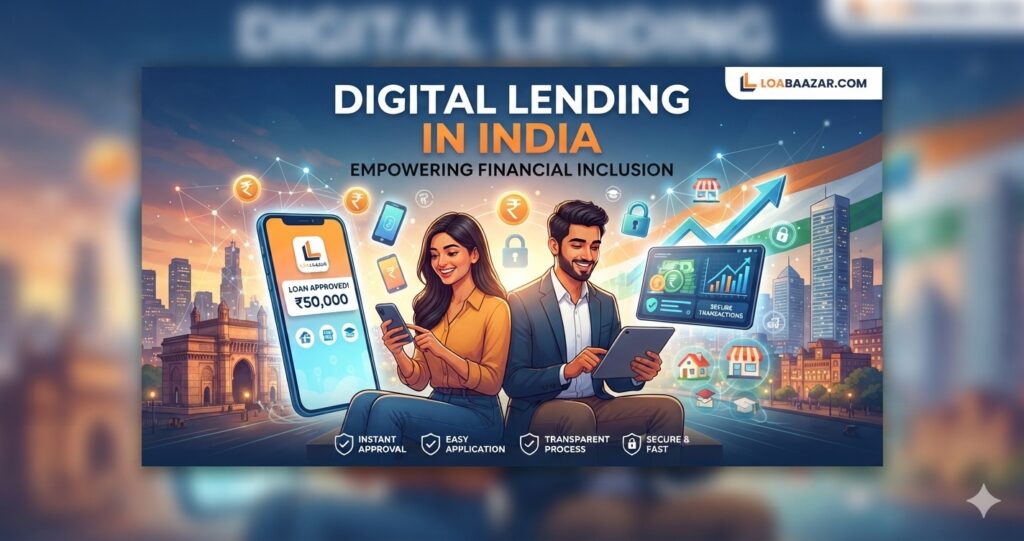
How Technology Is Reshaping the Way We Borrow
India’s credit landscape has changed more in the last decade than in the previous fifty years combined. At the centre of this shift is digital lending in India — a wave of technology-driven borrowing that has made loans faster, more accessible, and far less paperwork-heavy than the traditional bank visit ever was.
Whether you’re a salaried professional needing quick funds for an emergency, a small business owner looking for working capital, or a first-time borrower exploring credit options, understanding digital lending in India can help you make smarter, faster, and safer borrowing decisions.
What Is Digital Lending?
Digital lending refers to the process of availing loans through online platforms and mobile apps, without the need for physical branch visits or stacks of paperwork. From application to disbursal, the entire journey — KYC verification, credit assessment, document upload, and approval — happens digitally.
Banks, NBFCs (Non-Banking Financial Companies), and fintech lending platforms all now offer digital lending in India, using technologies like Aadhaar-based e-KYC, video verification, and API-driven bank statement analysis to assess borrowers within minutes.
Why Digital Lending Is Booming in India
Several factors have fuelled the rapid growth of digital lending in India:
1. Widespread Smartphone and Internet Penetration
With over 900 million internet users and affordable data plans, more Indians than ever can access lending platforms directly from their phones — even in tier-2 and tier-3 cities.
2. India Stack and Digital Infrastructure
Aadhaar, UPI, and the Account Aggregator framework have created a robust digital backbone. This infrastructure allows lenders to verify identity, assess income, and disburse funds almost instantly, making digital lending in India efficient at scale.
3. Rising Demand for Quick, Unsecured Credit
Personal loans, short-term credit, and Buy Now Pay Later (BNPL) options have seen massive uptake, especially among millennials and Gen Z borrowers who prefer speed and convenience over traditional banking relationships.
4. Alternative Credit Scoring Models
Many digital lenders now use alternative data — such as utility bill payments, transaction history, and even social behaviour patterns — to assess creditworthiness. This has opened up formal credit access to millions of new-to-credit borrowers who lack a traditional CIBIL history.
Types of Digital Lending Products in India
- Personal Loans – Instant, unsecured loans disbursed within hours for medical emergencies, travel, weddings, or debt consolidation.
- Business Loans – Quick working capital and term loans for MSMEs, often based on GST returns and bank statement analysis.
- Buy Now Pay Later (BNPL) – Short-term, interest-free or low-interest credit for online purchases.
- Loan Against Mutual Funds/Securities – Digitally pledge investments to secure instant liquidity without selling assets.
- Gold Loans Online – Doorstep gold evaluation combined with online disbursal.
Benefits of Digital Lending in India
- Speed – Loans that once took weeks can now be approved and disbursed within a few hours.
- Convenience – No branch visits; the entire process happens on a smartphone or laptop.
- Wider Access – Borrowers in remote areas can access credit that was previously out of reach.
- Transparency – Digital platforms typically display interest rates, processing fees, and repayment schedules upfront, helping borrowers compare options easily.
- Financial Inclusion – Alternative credit assessment models are bringing millions of underserved and new-to-credit Indians into the formal lending ecosystem.
The Regulatory Landscape
The Reserve Bank of India (RBI) has actively worked to bring structure and borrower protection to this fast-growing space. Its Digital Lending Guidelines require lenders to:
- Route loan disbursals directly between the lender and borrower’s bank account (not through third-party wallets)
- Provide a clear Key Fact Statement (KFS) detailing all costs
- Ensure data privacy and obtain explicit borrower consent before accessing personal information
- Register loan service providers and lending apps to curb unauthorised digital lenders
These regulations have made digital lending in India safer while still preserving the speed and convenience borrowers value.
Challenges Digital Lending Still Faces
Despite its rapid rise, digital lending in India isn’t without hurdles:
- Unregulated apps that mislead borrowers with hidden charges or aggressive recovery practices
- Data privacy concerns around how personal and financial information is stored and used
- Over-borrowing risk, especially among first-time credit users unfamiliar with repayment discipline
- Digital literacy gaps in rural and semi-urban areas that can still limit adoption
Choosing RBI-registered lenders and trusted platforms is the simplest way for borrowers to avoid these pitfalls.
Tips for Borrowers Exploring Digital Lending
- Always check whether the lender or lending app is RBI-registered or partnered with a regulated NBFC/bank.
- Read the Key Fact Statement carefully — compare interest rates, processing fees, and prepayment charges.
- Avoid borrowing from multiple apps simultaneously; it can hurt your credit score and repayment ability.
- Use loan comparison platforms like LoanBaazar to evaluate multiple digital lending offers side by side before applying.
The Road Ahead
As India moves toward a more cashless, digitally verified economy, digital lending is expected to grow even further — powered by AI-based underwriting, deeper Account Aggregator adoption, and increasing collaboration between banks and fintechs. For borrowers, this means faster access to credit, more personalised loan products, and greater transparency than ever before.
Digital lending in India is no longer just an alternative to traditional banking — it’s fast becoming the preferred way millions of Indians borrow, save time, and manage their financial needs.
Looking for the best digital lending options tailored to your needs? Compare personal loans, business loans, and more on LoanBaazar to find the right fit — quickly and transparently.
Related post