India’s retail loan market has just posted another strong quarter, and one product is far ahead of the rest. According to the November 2026 edition of CRIF’s How India Lends report, which covers data up to September 2026, India’s retail credit portfolio reached ₹185.2 lakh crore, up 18.8% year on year. However, the gold loan market grew fastest of all, rising 60.6% to ₹23.3 lakh crore, and it now makes up about one in every eight rupees of retail credit.
At the same time, the report shows the first signs of repayment stress in some segments. Here is what the numbers say, why gold loans are booming, and what borrowers should do about it.
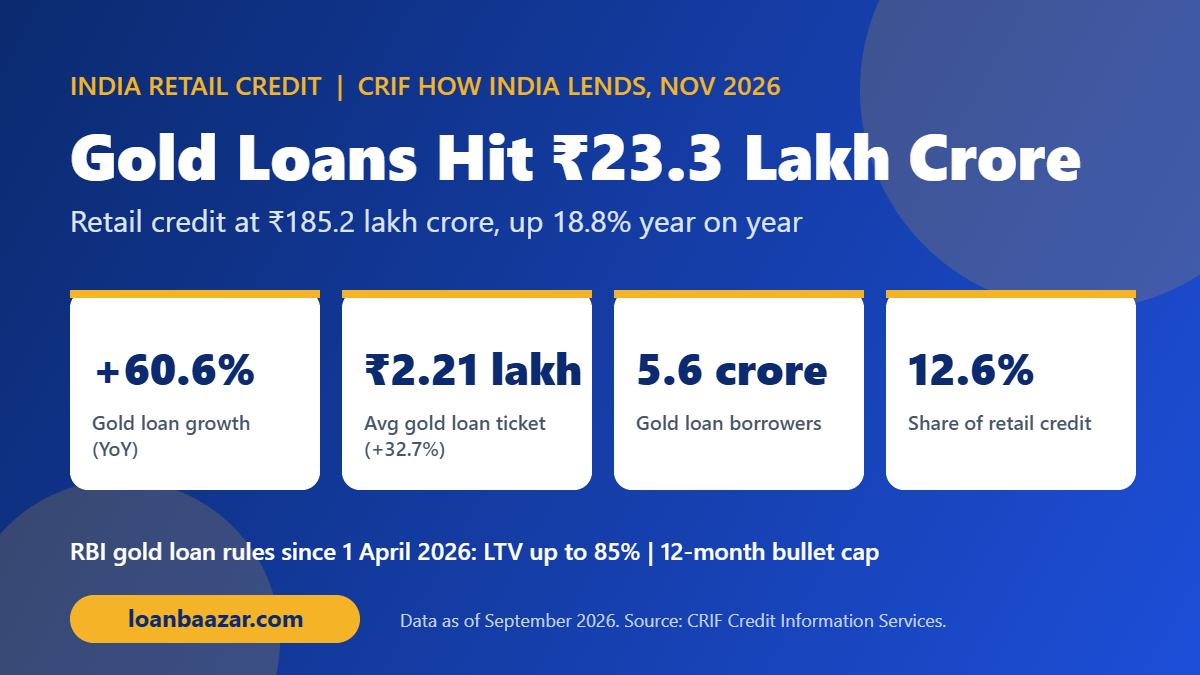
Retail credit at a glance (September 2026)
| Indicator | Figure |
|---|---|
| Total retail credit outstanding | ₹185.2 lakh crore (+18.8% YoY) |
| Housing loans | ₹46.4 lakh crore — largest segment, 25.1% share |
| Gold loans | ₹23.3 lakh crore (+60.6% YoY), 12.6% share (9.3% a year ago) |
| Secured business loans | +45.2% YoY |
| Credit card balances | ₹3.4 lakh crore (−3.8%), even as cards in use rose 5% |
| Personal loan PAR 91–180 | 1.1% (up from 0.8% in June 2026) |
| Gold loan PAR 31–90 | 1.3% (up from 0.9% in June 2026) |
Source: CRIF Credit Information Services, How India Lends (November 2026 edition). PAR = portfolio at risk, the share of loans overdue by the stated number of days.
Trend 1: India is borrowing against collateral
The biggest shift is towards secured lending. Most of the new retail credit added in the last year went into loans backed by gold or property: gold loans, secured business loans, home loans and loans against property. Meanwhile, unsecured lending has slowed since the RBI raised risk weights on it and lenders tightened their checks. In fact, credit card balances shrank even as banks issued more cards.
As a result, if you have collateral such as gold, a house or business property, lenders are keen to lend to you right now, often at better rates than unsecured loans.
Trend 2: The gold loan boom is about price, not more borrowers
The gold loan book has more than doubled in two years, from about ₹10.7 lakh crore in September 2024 to ₹23.3 lakh crore today. However, look closer:
- The number of new gold loans actually fell 4.1% in July–September 2026, while their value rose 27.2%.
- The average ticket size jumped 32.7% to about ₹2.21 lakh. Loans of ₹5 lakh and above were about 10% of loans by count but over 40% by value.
- Above all, gold prices have risen sharply, so the same jewellery now fetches a much bigger loan.
In addition, the borrower base is widening. The number of gold loan borrowers rose from 3.7 crore in September 2023 to 5.6 crore in September 2026. Demand is growing among women, first-time borrowers and people in smaller cities, beyond the traditional southern markets.
Trend 3: New RBI gold loan rules are changing repayment habits
The RBI’s Lending Against Gold and Silver Collateral Directions came into force on 1 April 2026, and the September quarter is the first full quarter of data under them. The key changes for borrowers:
| Rule | What it means for you |
|---|---|
| Tiered loan-to-value (LTV) | Up to 85% of gold value for loans up to ₹2.5 lakh, 80% for ₹2.5–5 lakh, 75% above ₹5 lakh |
| Bullet loans capped at 12 months | You must repay principal and interest within 12 months on lump-sum (bullet) loans |
| Renewal only after interest is paid | You can no longer roll over a loan indefinitely by paying nothing; you must first clear the accrued interest |
| Credit check above ₹2.5 lakh | Lenders now assess your income and repayment capacity |
| Fair valuation and timely return of gold | Clearer valuation norms, auction rules and a fixed timeline to return your gold after closure |
In response, many lenders moved customers to products where interest is paid every month. This is healthier in the long run. However, it has caused short-term strain: early-stage gold loan delinquencies (31–90 days overdue) rose from 0.9% to 1.3% in a single quarter. Similarly, large gold NBFCs have reported a rise in loans under watch, although most customers continue to repay on time.
Trend 4: Early stress in personal loans
Personal loans are still growing. Even so, the share of loans overdue by 91–180 days rose from 0.8% to 1.1% between June and September 2026. According to the analysis of CRIF’s data, most of this stress sits in NBFC personal loans in the ₹2–10 lakh range. NBFCs issue 92.1% of personal loans by count, mostly small-ticket digital loans, while public sector banks have been gaining share by value.
On the other hand, shorter-term overdues (31–90 days) and very old overdues (180+ days) improved. Therefore, this is a warning sign to watch, not a crisis.
What this means if you are planning to borrow
- Use collateral smartly. For example, if you own gold, a gold loan is often cheaper and faster than a personal loan. Still, borrow what you need, not the maximum LTV allows. If gold prices fall, a high-LTV loan can trigger a margin call or top-up demand.
- Choose monthly interest over bullet repayment if your cash flow allows. Under the new rules, you must close a bullet loan in 12 months; otherwise, the lender can auction your jewellery.
- Read the fine print on valuation. Ask how the lender assessed your gold’s purity and weight, which gold rate it used, and what the auction process and notice period are.
- Be careful with multiple small personal loans. Stacking app-based loans is exactly where stress is building. Lenders report every missed EMI to the credit bureaus, and each one hurts your score.
- Protect your credit score. Because credit bureaus now get data more often, a late payment shows up faster. See our guide on how to improve your CIBIL score.
- Compare before you sign. Interest rates, processing fees and foreclosure charges vary widely between banks and NBFCs for the same loan. Check the latest personal loan interest rates and home loan interest rates.
The bottom line
India’s retail loan market is growing at a healthy pace, and it is becoming more secured. Overall, the gold loan boom is giving millions of households quick access to credit at reasonable rates. However, higher gold prices and bigger loans drive most of it. The new RBI rules require borrowers to repay more regularly, and the early rise in overdues shows that not everyone has adjusted yet. In short, the opportunity is real. Borrow within your means, prefer regular repayment, and keep your credit record clean.
Frequently asked questions
How big is India’s gold loan market now?
As of September 2026, outstanding gold loans stood at ₹23.3 lakh crore, up 60.6% year on year, according to CRIF.
How much loan can I get against my gold?
Under the RBI rules effective 1 April 2026, up to 85% of the gold’s value for loans up to ₹2.5 lakh, 80% for ₹2.5–5 lakh, and 75% for loans above ₹5 lakh. However, a lender may offer less.
Can I still renew my gold loan by paying only interest?
Lenders allow renewal and top-up only if the loan is standard, stays within LTV limits, and accrued interest has been paid. Also, you must settle bullet repayment loans within 12 months.
Do I need a credit check for a gold loan?
For loans above ₹2.5 lakh, lenders must assess your repayment capacity. Smaller loans have lighter checks, but lenders still report your repayments to credit bureaus.
Is it a good time to take a personal loan?
Credit is available. However, lenders are watching overdues closely, especially for ₹2–10 lakh NBFC loans. A good credit score and a manageable EMI-to-income ratio will get you better terms. Alternatively, if you own gold or property, a secured loan may be cheaper.
Looking for a gold loan, personal loan or loan against property? LoanBaazar helps you compare offers from leading banks and NBFCs and guides you through the application. Check your options with LoanBaazar today.
Data sources: CRIF Credit Information Services, How India Lends (November 2026 edition, data as of September 2026); Reserve Bank of India, Lending Against Gold and Silver Collateral Directions, 2025. This article is for general information only and is not financial advice.